

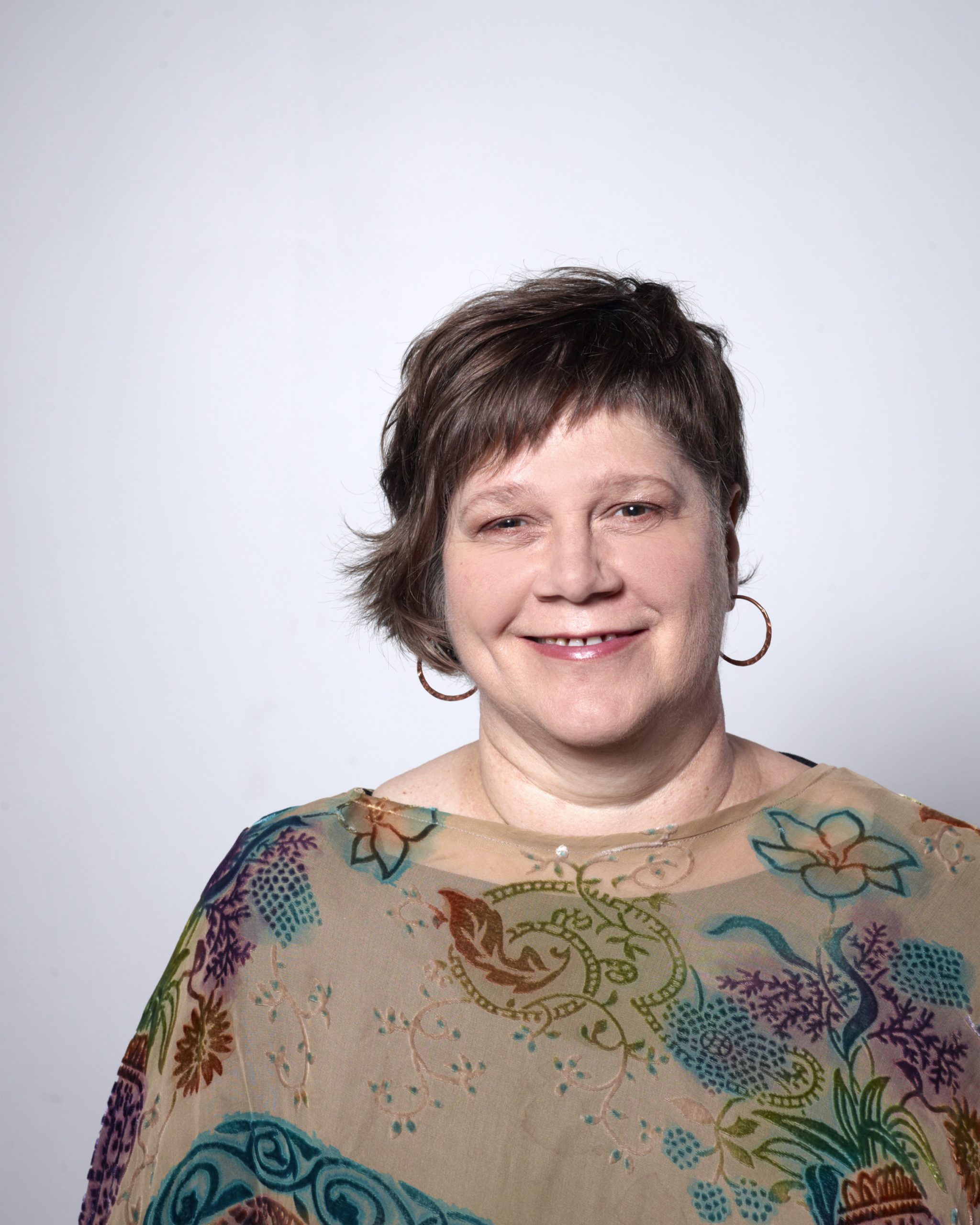
The show’s guests in this episode is Dr. Liane Davey. She is a bestselling author and executive advisor who has spent three decades helping people achieve amazing things together. Her work focuses on tackling the messiest people issues holding teams back, including fostering accountability, promoting healthy conflict, and managing overwhelm. Liane’s latest book, Thoughtload: Manage the Madness and Free Your Team to Do Great Work, addresses the mental and emotional overload crushing today’s teams.
—
Listen to the podcast here
Digital Detox & Thoughtload with Liane Davey
Hello and welcome to the Experimental Leader podcast. I’m Melanie Parish, and I’m an author, a content creator, and a coach.
Hi, I’m Mel Rutherford. I’m an academic psychologist, and I’m the author of *The Glass Cliff: One Trans Man’s Leadership Odyssey* and the co-host of the Experimental Leader podcast.
Well, it’s nice to be here with you today, Mel. What are you thinking about in terms of your own leadership?
Well, I’ve just finished a five-year term as chair of my department, and I’m thinking about former leaders making space vision. So a a good friend of mine has stepped into the leadership role. Is now chair of my department, and I I’ve been thinking about I you know I told him I’m here to support you, but I also want to to make make space for your vision, and I’m excited to see what what vision you’re bringing forward, and so I’m being being pretty intentional about. I haven’t even been in the building since he became chair, and making sure I leave a lot of space for him to develop what he’s going to develop.
I think that’s really interesting. Weirdly, my topic, what I’m thinking about in leadership, is making space in our 1984 camper van so that we can go off on a six-week book tour, followed by a couple of months book tour. Like we’ll be touring for the next two years, doing a book tour, and so I feel like my leadership is about this combination of studying, like reading what people say about van life and what they they think we need, and then sourcing those things, and then trying them out in the van and seeing what fits, and then sort of doing some continuous improvement to see what doesn’t fit or what we don’t think we need, and being willing to ditch the mistakes. And and so I feel like I’m kind of in this world of both vision and continuous improvement that is really interesting, and it’s about preparation for a thing that’s coming.
Well, that sounds fun and clearly experimental.
Super experimental because I don’t know. I don’t know anything, and I also don’t want to be caught unaware in the middle of Kansas in the summer, and not have the thing that plugs us into electricity. Or I want to know how the water works. So there’s lots of parts.
Do we have a guest today?
Oh my gosh, we have a great guest. She’s a repeat guest. Her name is Dr. Liane Davey, and she is the teamwork doctor. She’s a best-selling author and an executive advisor who spent three decades helping people achieve amazing things together. And she has a new book out called Thoughtload: Manage the Madness and Free Your Team to Do Great work, and this book addresses mental and emotional overload that is crushing today’s teams.
—
Liane, welcome to the show
Tell me a little bit about what you’re experimenting on in your life and work right now.
Ooh, fun question! All right, I have it. I actually am experimenting on something right now, so I actually have an answer. So, you know, in the work that we’re going to talk about, what I’m paying attention to right now is that our workload is not the thing that is killing us all and burning us all out, but instead, it’s our thought load. We can talk more about that, but essentially, I wrote a book about all the things we need to do to keep our thoughtler, get our thought load down, and keep it down. But then I realize that for many folks, when I interact with them, they say, “I am so overwhelmed, I can’t even start to do things to feel less overwhelmed, and I thought this was so interesting. So there’s a chapter in the book called “Do More Nothing, and it’s really a reset for our brains, our nervous systems. It’s kind of a full body reset, and it it is. A thing I call a two-week cleanse, which doesn’t cost anything. It doesn’t involve juice, but it’s a two-week cleanse. Where over the period of two weeks, you find at least five or six chunks of one hour where you have zero input, and doing that gives you time to metabolize all of the stuff, the thoughts and the feelings and the emotions and everything that’s in your head. So what I’ve been experimenting with is figuring out what for me are the best things I can do in my nothing slots. So this morning I got up super early and we back onto a big, beautiful, beautiful cemetery, and I was like, okay, I’m gonna have no podcast, no music, and I’m gonna just walk and enjoy it. And I did seven kilometers. That’s how big the cemetery is. It’s huge that you can do a seven kilometer circuit, and that was great. But I’m also experimenting with coloring. I got myself a coloring book and a set of 80 pencil crayons. I’m experiment, so I’m just experimenting with, you know, what is the best thing to be doing to process and metabolize all that’s in my head. How does it change over the course of two weeks? Like, do I have more sort of concrete task-based thoughts for the first couple of times, and then do I get to more emotional thoughts? So I’m having a blast experimenting with the two week cleanse and figuring out which activities really work and what do they trigger and all that good stuff.
Interesting.
Why two weeks? And how do you know when it’s time to do it again?
So why two weeks? Because it felt like it felt like long enough. So when I experimented with just trying to do it like once and see what I got, what I found is that I, you know, just once wasn’t enough. There’s so much in my brain pantry, I couldn’t metabolize it all in just an hour. So I tried a little bit longer, and then I got a lot of pushback from folks when I would say, like, you know, do a little bit of this every day. They were like, “Well, I can’t do it this day. I always wreck my hair when I do things like that. I can’t do it this day because I have to take the kids to hockey, or I have to. So it just made sense to kind of say five or six one-hour chunks over a couple of weeks made sense, but in terms of how do you know you’re done? So I would say that I’m almost moving toward having this as a as a practice. So how can I keep up two or three times every week that I’m doing this? But you know that you’ve made meaningful progress in a few things. So first of all, you know, stuff has started to like nourishment has started to come out. So you’re starting to have connections between things you’d never seen before. You’re starting to have insights about oh, this relates to that. So that’s one piece. The second piece is you know that you’ve kind of made substantive progress where your your emotions are less close to the surface. Like there’s been some stuff that’s sitting on you, weighing on you, and you’ve gotten to the other side of it. You’re like you’re not waking up with that, right? Or or that every time you think about it, you feel that fight or flight response. That’s another thing. And then I would say the third thing is, you you actually feel energized. So when you sit down to do a piece of work, you have the energy for it. When you sit down at the dinner table, you have the energy to be present. And so those are the three markers that I’m looking for to say like, oh, this has worked, right? This this two week cleanse has worked, but now I’m getting kind of addicted to how good it feels to be continually metabolizing everything in the brain pantry, so I’m kind of doing it for longer.
One of our kids came home from university and decided to do a digital detox, and did like full out digital detox. Bought himself a flip phone so he could still communicate with his friends. Like one of the ones where you have to hit A, B, c1. key does three letters.
Yeah,
And so he didn’t even really text because he found that so onerous that he just called his friends and talked to them, which
you know
21 year olds don’t do no, and um and he discovered he read 10 books in a month. Yeah, this is not a kid who reads like he read more books in that month than he’d read in his entire life.
Yeah, and how did he like? What did he get out of it?
Well, he was having some like he’s gonna kill me if you listen to my podcast, he doesn’t really listen, so it’s fine. He he was having some like feeling like a dopamine addiction,
Yeah,
And so he wanted to cut it off and see what life was like, and it’s reminding me of what you were talking about, what it was like without like a constant dopamine. Input into his brain all the time, and so for him, he wanted to break that. So he didn’t want to do it at all. He, what he learned, there was a couple of things he learned. He he learned he doesn’t like he doesn’t have any need for those video games going back. Like he he gets it, like he feels better. He feels, I think, more engaged, more emotion. Although occasionally, like the emotions are different, like like they’re not pleasant when you have emotion that you’re used to not feeling.
Yeah.
and um, and I think um, like after a week, he realized he wanted to use his iPad for function,
Yeah.

Not for the things he was doing before. So not YouTube, not scrolling, not any of that. But he wanted to use it for music because he’s a he’s a musician, and he wanted to use it to read books because he could get them from the library, and he got tired of paper books. Libby’s fantastic. So, so it was just this really. So it became really functional, and then now he’s working at a camp where the signal’s terrible for the rest of the summer. Yeah. So we bought him a. He’s he plays guitar, and we bought him a campfire songs book.
Oh, that’s awesome. You know,
So it’s been a really interesting journey for him. We read a book. What’s the book that we read? The Anxious Generation.
Oh, what a great yeah! He’s amazing. Yeah, yeah, yeah. Like
And none of his solutions they weren’t my favorite part of the book, but the thinking and the research is fantastic in that book. A great read for anybody thinking about.
I loveit, and and what I love about it is that if we could cure some of these things in childhood, then we wouldn’t arrive in adulthood like jonesing the way we are, right? Like so much of what’s what’s really harmful in our lives right now has has been around for a long time for us. So, yeah, it’s like just things like free range play, and and you know one of the other things that he determines or shows the data on is how you know when we had free range play, kids of different ages played together, right? It was like the kids on the block, and so there was this natural looking out for the younger kids and socializing one another. And you know what? All of that has been lost in our virtual workplaces because
decision making,
like
decision making, collaboration, making up the rules, talking about the rules, yeah,
yeah. But we don’t have free range play if we’re not in offices together, right? So if you’re in an office together, you’re all standing around the coffee pot, and you’re again with people who are more senior or more junior than you. You have a chance to, but we’ve lost that from a lot of our workplaces as well as we’ve moved to more remote work, and so a lot of the themes are things we can apply, you know, to to all of us in the workplace as well.
Yeah, I I think it’s I think it’s super important to think about those things and to, I mean, Mel’s a developmental psychologist, so it’s it’s always funny when I’m talking with authority about the subject matter. Yeah,
well, that’s what I do. My husband’s the neuroscientist, so I just like he gives me all the data, and I make it digestible. It works. Yeah.
What ideas are you excited about in your new book?
Yeah, I’m. Well, I’m super excited. The thing I’m most excited about is the word on the front cover, right? So we all we have had to communicate with one another about how overwhelmed we are is the word workload, and it was not working anymore because you know individual contributors were trying to say that it all felt too heavy, and every time they said like I can’t handle this workload, the managers were looking at them like I don’t know what you’re talking about. You’re not getting anything done. Like how heavy is your workload? And so the the thing I’m most excited about is that you know giving people a word for this invisible tax on our performance, giving people the language to say to their manager or to their colleagues, to their partners, that I am, my head is going under the water here, not because of the work, because of everything else. And so, this idea of an invisible tax on our performance that comes from this treacherous triad of of cognitive demands that are going up at a most alarming rate, emotional burdens that we’re facing, and then carrying that whole load on depleted energy reserves. So, you know, that’s what I’m most excited about. the The book is built to be very practical. Very the term I used when I was working with my editor and my designer was, “Can we?” Write a book that is buoyant, that gives somebody a life ring to grab onto and get their head above the water. And so I’m excited. I would say those are the two things. In in the the what I’m excited about the concept of thought load and and the conversations it it is facilitating. And in the how I’m super excited that I I work with a publisher at page two, that was willing to go through you know dozens and dozens and dozens of research studies and all of that, and then get it all the way to the point of being buoyant, both in how it’s written, in the length of the chapters, in how it’s laid out. It was designed to be buoyant, so that’s probably the what and the how that I’m most excited about with the book.
That’s really fun.
It was fun.
Yeah. So I’m curious about like what’s the vision on the hill. So like once you detox and you work that into your world and you your thought load changes, which I love that idea because it it workload. You’re right. Like when you’re overwhelmed, you’re not doing anything, so it’s hard to, and you look lazy, which is not what it is. Yeah, not what it is
at all.
So what’s possible if your team is doing great work after this?
Yeah, it’s so exciting what’s possible because, of course, the goal is not no thought load, like not just on a lawn chair, just drooling. the the The city on the hill is a place where our thought load is manageable, so the actual load itself is is something we can bear, but that it’s so filled with the things we deliberately choose to give our lives to, so it that our thought load is filled with things worth paying attention to, things worth being emotionally invested in, things worth using our energy on the goal is not to to minimize thought load, it’s to get it to a level where we can manage, but it’s also to to direct it to the things both at work and at home that you know allow us to make meaningful contribution to feel the joy of a a new insight, a new idea that moves the needle to feel the the absolute connection of being present at the dinner table with someone and how right that’s what it’s about. So yes, there is some degree of of bringing the absolute value of our our thought load down, but it’s also shifting it. Like if you think about how much of your thought load right now is on stuff that just does not deserve to be there. The other thing that’s interesting, Adam Grant’s been writing about this recently, writing about how you know as humans we are very empathetic, we we are very sensitive to the world around us, we were not built to to see on a daily basis the suffering of 8 billion people, and we’re short circuiting on it. Right, there is so much war, there is famine, there is hate. There, right, and so it’s like there’s so much in our thought load. I think like your son’s digital detox, like first-person shooter game, YouTube, you know, fluff, whatever. Is that what I want in my thought load? Is that what deserves to be there? So it’s also this redirection. I want to know about people suffering in my community that I can help. I want to know selectively about things where I can make a difference, but just you know, being empathetic to 8 billion people on the planet is kind of immobilizing us. So, yeah, that’s the goal for me: lower thought load and directed in the places where that thought load leads to really meaningful things in in my life.
It’s interesting because I I keep having a almost a visceral reaction to the the word meaning, and I think it’s because my thought load is high.
Yes,
It’s like more meaningful things. Wow, that’s a lot of work.
There you go. You have exactly diagnosed yourself as having high thought load because when your thought load’s lower, you’re like, I can go do something that’s meaningful. Yes, I know meaningful. That
Sounds hard. Meaningful. Gosh, do we have to do it better? So that it’s really interesting. This this idea. What else should we ask, Liane?
So I was just thinking, like when you and I spoke last time, it was about my work on productive conflict and the good fight and the importance of that. So there’s a strong link there. The other thing we cannot even imagine or. Engage with when we have high followed is that good fight because we like we we look at it we’re like I can’t add more decision fatigue of having to weigh in on that or I I don’t know enough about that person’s stuff and I can’t read the pre read I don’t I don’t have the time for that so I’m not up on it I can’t risk that they’ll like yell at me or not like me or whatever, and I got no spare energy to burn, so I’m going to avoid that conflict. So you know, on the one hand, we don’t lean into you know finding meaning, but on the other hand, we lean away from things that we really need to deal with because when we don’t, they just hang over us, and our thought load kind of gets heavier. So we’ve got this really ironic situation where high thought load causes conflict debt, and conflict debt raises our thought load. So there’s a real connection between the conversation that we had six years ago, and I think in some ways that’s why I got so fascinated by Thoughtload as I’d been out there trying to encourage people to fight the good fight and really trying to understand why they weren’t. When I stumbled across, oh, now I know why they just they just can’t they just don’t have the gumption, energy, clarity to do it.
I think about where our children are, where we are, and I don’t feel like I have any mentors. Like I can’t look back at how my parents dealt with technology or the thought load that is our lives now. That just it changed in a generation. Like we don’t have. There’s not much thought leadership, like historical thought leadership, about this this problem. So I really like that you’re doing this thinking about this and offering offering ideas on what do we do about this thing that has happened to us. I I remember like we we’ve been here 24 years in Canada, and the first years we would unplug our TV and VCR and put them away for the summer.
brilliant idea,
and we just didn’t have them. But now everybody’s got their own individual device, and we’re all in different rooms, and we’re like it’s we’re not in charge of our household. I mean, our kids don’t necessarily live here, but also we’re not in charge of our household anymore because I also do Zoom on my computer. I can’t put it away for the summer, much as I like to. Yeah. So I, I think it’s um, it is it is a challenging problem that that screaming for continuous improvement, you know what
I? I wish I could send you this picture. So, my husband, our best friend, and I, each of us, our mothers, are widowed, and so we started this tradition of taking them away for a week to bucket list places, and we call it the Mary Widows tour. And last year we went to Prince Edward County, beautiful place, and rented this lovely house. and And we have this picture of the three of them, and they they live alone. You know, it’s it’s isolating. We’re doing this trip to create connection and and not have them be alone. For and we have this picture of the three of them along the wall, each on their iPads, each playing games separately. So my mom’s 92. She’s so my daughter refers to them as the screenagers because they it’s it’s happened to them too, and so we have this horrible paradox in society that we are all suffering and struggling with isolation and loneliness, but we can even be sitting in a room. These devices are so addictive that that we’re sitting there, you know, away on a vacation intentionally for connection. And so, what we found is we had to just like go to restaurants and do things like that because then we actually sit and talk to one another. But the minute you’re you, we were back at the Airbnb, out came everybody’s iPads. Or okay, right? We we are yeah. It’s just painful.
My our kids grew up with a no screens at the table rule, which they still believe. I mean, they’re gigantic, and you know they they could take us in a fight, but but they still believe this rule is true. And thank goodness, because yeah, you know we get time every day where we sit and talk to each other, but I’m the one who, like, I’m the one who’s likely to break the rule. It’s you know, it’s such an interesting thing to keep applying intentionality here.
Yeah, it’s one of the reasons why I love to go out to dinner because we don’t have screens at the table at home, but we’re pretty. It’s now just my husband and I empty nest. And we’re pretty efficient at having dinner in like 20 minutes, and then then we’re back to you know our separate lives. And if we go to a restaurant, you know, you got at least an hour and a half if you’re doing it right. But the problem is, and this is interesting because when I grew up, we didn’t eat dinner at the kitchen table. We ate dinner in front of the television, which is very funny for a very close family. Most people think that that’s strange because I do have a very close family and parents who were very invested in parenting. But what we did instead was we sat in front of the TV and we watched the local news and the national news, and then we watched the McNeil Lehrer News Hour because I’ve been a nerd since 1975. And in our family room, we had the full Encyclopedia Britannica and an atlas. And when something came up on the news, if you didn’t know where the place was, you put down your dinner and you got up and you went and you got the atlas and you figured it out. Or if there was something you didn’t understand, you got the Encyclopedia Britannica. And this is how I was raised. It has made me a very curious person. Like that’s just part of me, but now you have all those things in this device, and so even when we’re at restaurants, something will come up. Like people don’t use the phone antisocially, thankfully, when we’re out to dinner as a family, but we do use it in the same way I used it growing up as the Encyclopedia Britannica, and so our our younger daughter instituted the rule that it’s only one phone allowed because what you found is as soon as something came up, like who starred in this movie or whatever, the person would pull out a phone to figure that out, and there is this immediate reflex of one or two other people that oh I have permission now to grab my phone, and then it’s antisocial. So the rule in our family, is only one phone up, and that sometimes things like, “Hey, is there any show that we could get a ticket to? Where like one person is allowed, and it’s funny. I’ve instituted this when I’m facilitating team meetings, and it’s great because part of what I say at the beginning is, “Look, you’re adults, and I understand that stuff happens, and there are emergencies, and there are things you need to just check out. Great. So one phone in this room of 10 people, one phone up, fine. And that’s being an adult. But if I see a second phone go up, I’ll call out both of you. I’ll be like, two phones up, and it’s really, really interesting to see how well that works. So that’s been a fun one. And and I always credit Mac. Like this is from my daughter. She came up with this, but only one phone up is great because it cuts off that reflex of well, he’s touching his phone, so I get to touch mine. I’m like, really? We used to
We used to be at dinner or sitting around like on the jacket late at night, and we’d be talking about who sang that song and what year was that, and we just talk about it.
for a while, or like crazy ass guesses. You’re like, I think it was 1975. It was like
Conversation,
right? Like, no, no, because
Information is immediately available. There’s no, you don’t have to talk about. You never talk about facts, and I I don’t know if that’s a good thing or a bad thing, but it is a change that we’ve seen in our adulthood. It’s not even in our lifetime.
So I would say what I’m really seeing in organizations is this like unwillingness to sit in ambiguity. Right? I need the answer right now, and so so much of what I’m seeing in terms of how people are using AI is they’re just pumping stuff out. And I read it later. I’m like, what even is this? Like, what problem are we solving with this? Like, do you do you have your eyes on the prize? What what were we trying to accomplish here? And it’s just so immediate. So I’m thinking of it very much like the problem I now have in my life. I used to, I was a summer camper as well, and I used to lead kids on canoe trips and tomagami with topographical maps. Like I was actually pretty decent. And then at some point, I started using Google Maps, and now I can’t find my way out of a wet paper bag. It’s terrible. I have completely let my sense of direction atrophy, and so when I started writing the book, I noticed I love alliteration, and so I noticed I would sometimes be like, “Oh, I’d love to get an alliteration for this, and I’d go into an AI, and I’d say I want you know a verb and a noun that means sort of this. Give me 10 examples of you know pairings that start with the same letter, and then I noticed I was doing that without even spending 10 seconds trying to think up my own. And then I was like, I’m a writer. What am I doing? I’m giving away this thing I find joy in. What am I doing? Asking it for a metaphor here. I love coming up with metaphors. So I think that’s the other thing we have to really worry about: this cognitive atrophy or this cognitive surrender of just abdicating all depth of processing. And Mel knows this, right? Depth of processing. Is where everything good comes from-memory, insight, like everything-and I think we’re about to have this automaton army of people who are not processing anything with any depth, and it’s a little scary. It’s a little-it’s more than a little scary, and I’m seeing it on teams. Just the schlock that’s coming out.
I think that’s really interesting. Where can people find you, Liane?
Yeah, yeah. So because spelling my name is super challenging, we’re just going to go with ThoughtLoad.com, and ThoughtLoad.com is going to take you to a page that has all sorts of goodness on it about this concept. It’s got an assessment, just two quick little assessments. One to help you understand how high is your thought load, and is it being driven more by the cognitive, the emotional, or the energy issues, and a second assessment to understand your particular individual differences in overwhelm type and what to do about it. But it’s also got a link to ThoughtWorld, which is the community where I have put dozens, dozens of free resources to help people manage their thought load or manage their team’s thought load. So, thoughtload.com, and then if you want to engage, LinkedIn is probably the best place for that.
Well, you have anything else, Mel?
Thanks for joining us.
Yeah, it’s my pleasure. Great to spend some time with you. Thank you so much.
Thank you.

—
My gosh, that was so interesting thinking about the idea of thought load as opposed to workload.
Yeah, it’s interesting to think about trying to manage what’s going on in your head, and how that can interfere with your actual productivity.
Well, and I’m even curious about the whole introvert extrovert thing and how that interacts with thought load and what kinds of thoughts are more difficult or more overwhelming to deal with, and then the clearing of it and all of that. Like I, I like this idea of managing it and really trying to create some sort of intentional thought load for myself. I think it’s a really interesting idea.
Yeah, both managing what goes in and also managing what you do with it.
Yeah, processing the processing part. So my brain will be working on this for you know a while now. I love this idea. Well, it’s been nice being with you today. Go experiment.
Go experiment.
Important Links:
Liane Davey

Dr. Liane Davey, the ‘Teamwork Doctor,’ is a bestselling author and executive advisor who has spent three decades helping people achieve amazing things together. Her work focuses on tackling the messiest people issues holding teams back, including fostering accountability, promoting healthy conflict, and managing overwhelm. Liane’s latest book, Thoughtload: Manage the Madness and Free Your Team to Do Great Work, addresses the mental and emotional overload crushing today’s teams.
Love the show? Subscribe, rate, review, and share!
Join The Experimental Leader community today:




Leave a Comment